

What Is Solo House Sax? A Beginner's Guide to Leo P's High-Energy Style
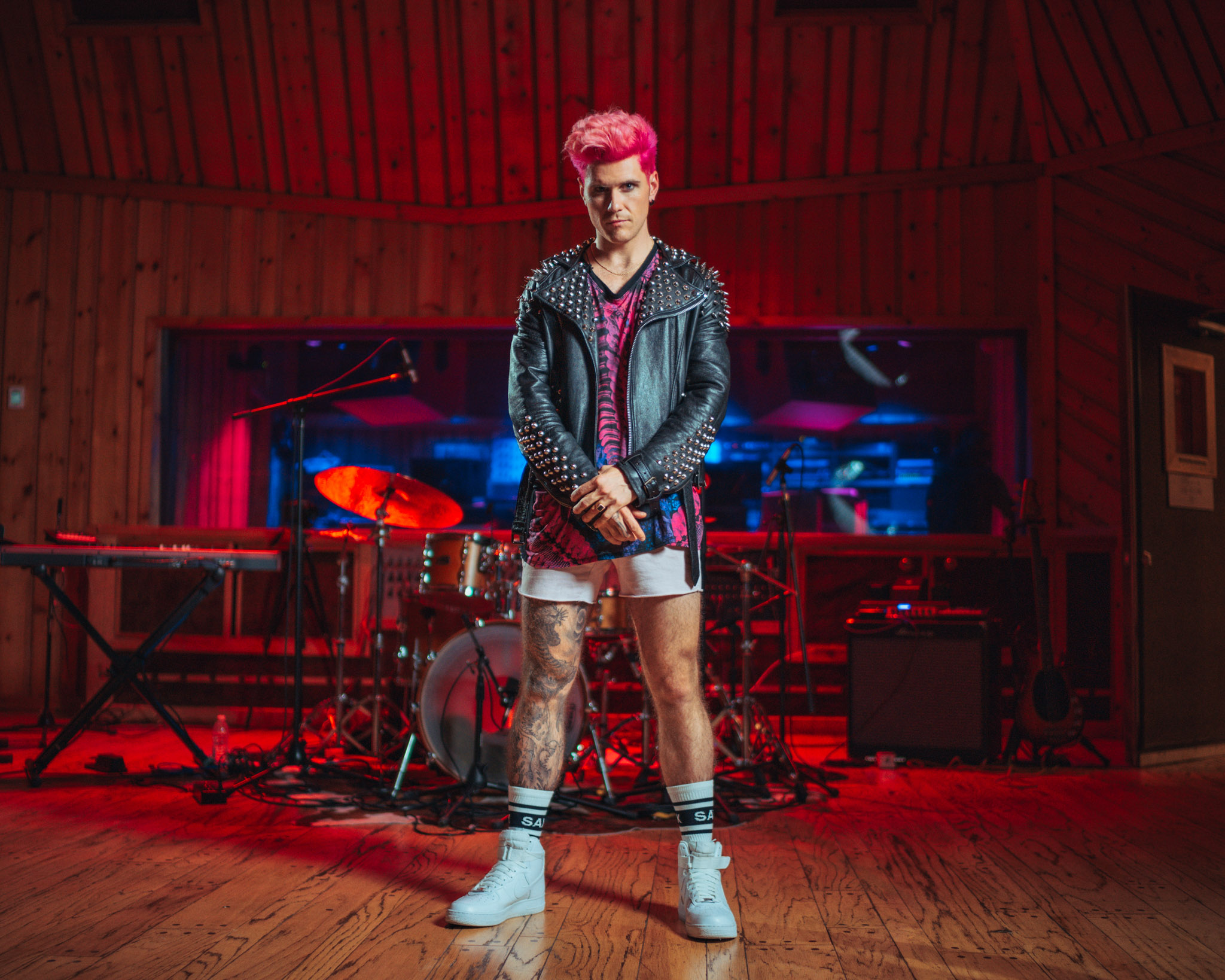
If you have ever seen Leo P perform, you know the experience: a single saxophonist generating the energy of a full electronic dance set, complete with driving basslines, screaming melodies, and a crowd losing their minds. That style has a name. It is called Solo House Sax, and it is one of the most exciting things happening in the saxophone world right now.
Here is what it is, where it comes from, and how you can start learning it.
The Origins: Brass House
Solo House Sax grew out of Brass House, a genre created by Leo P (Leo Pellegrino), Matt Doe, and the King of Sludge. Brass House takes the energy of electronic dance music and recreates it with acoustic instruments. When Matt was not around to play, Leo found himself needing to create all the melodic and harmonic parts alone on baritone sax. That limitation became a breakthrough.
The influences are exactly what you would expect from a style rooted in dance music: Skrillex, Zedd, Tiesto, Diplo, Swedish House Mafia, Kaskade, and Moon Hooch. The goal is to make a saxophone sound like a full EDM production, with driving bass, rhythmic energy, and crowd-moving intensity.
The Core Technique: Octave-Jump Basslines
The foundation of Solo House Sax is the octave-jump bassline. You play a low note, then immediately jump up an octave (or more) to create a punchy, percussive groove that mimics the feel of an electronic bass drop.
This sounds simple, but it requires serious embouchure control. You are essentially playing two registers of the saxophone in rapid alternation, and the jumps need to be clean, rhythmic, and locked into a groove. Leo's course walks you through six variations of these patterns, starting with basic eighth-note jumps and building to displaced rhythms and triplet feels.
The Phrygian Dominant Sound
If you have ever wondered why Leo P's playing sounds so distinctively intense, a big part of it is the Phrygian Dominant scale. This mode (the 5th mode of harmonic minor) has a dark, Middle Eastern-flavored sound that gives Solo House Sax its signature tension and energy.
Leo builds his basslines and melodies around this scale, and the course includes exercises that take you through the Phrygian Dominant mode in multiple keys. Once you get comfortable with it, you can start improvising your own Solo House phrases.
Passing Tones: Adding Chromaticism
Once you have the basic patterns down, Leo introduces passing tones to add chromatic color. His favorite is the natural 7th, the note between the dominant 7th and the root. Adding this single note to your Phrygian Dominant basslines creates a chromatic pull that sounds sophisticated without abandoning the harmonic framework.
Other passing tones include the tritone (used as a vehicle between scale degrees) and the minor 3rd (bridging the gap between the flat 2 and natural 3). As Leo puts it: "I first started learning about passing tones when I studied bebop at the Manhattan School of Music. This is a great tool to add to your improvisations, especially when you get bored of using the same scale notes over and over again."
Big Jump Counterpoint: Playing Bass and Melody at Once
This is where Solo House Sax gets truly impressive. Big Jump Counterpoint means playing jumps larger than an octave, allowing you to create both a bassline and a melody simultaneously on a single saxophone.
Leo developed this technique out of necessity. He often performed with just a drummer and needed to fill the harmonic space himself. The key insight: keep your melodies condensed within a few half steps. If you spread the melody out too wide, the jumps become unplayable and the sound gets clunky. Three different notes within 1.5 whole steps is a good target for your top-line melodies.
Sound Effects: The Signature Moves
No Solo House Sax performance is complete without Leo's signature sound effects:
The Leo P Gliss: Apply extra pressure on the reed as if you are about to squeak, but hold back just enough. Opening your throat and adding a growl makes it even more effective.
The Raptor: A very fast version of the Gliss, perfect for creating speedy counterpoints. Start by using it sparingly in your basslines, then gradually add more.
Squealiez: Controlled squeaks that move microtonally, like a slide whistle. Use maximum reed pressure without your teeth (teeth will destroy your reed mid-performance). Close all keys except the right pointer and middle finger for the cleanest sound.
The Foghorn: A loud, out-of-tune honk created with a "duck" embouchure where both lips are open like a duckbill.
Leo recommends using these effects at the end of phrases rather than the beginning. Since you are the only harmonic instrument, keeping strong low notes on downbeats is essential to maintaining the groove.
The Secret to Breathing
A common misconception is that Solo House Sax requires circular breathing. It does not. The real secret is many fast breaths. Write your lines with built-in spaces to breathe. If you cannot get enough air, your phrases are probably too busy. Adding more rests actually makes your playing sound more musical and gives you the stamina to perform for extended periods.
Getting Started
The Solo House Sax course on Sax Pro is Leo P's first and only course where he explains all of these techniques in detail. It includes 6 video lessons and 8 interactive exercises that progressively build your skills from basic octave jumps to advanced counterpoint and sound effects.
Prerequisites are simple: know your fingerings and be able to read music. Everything else, Leo will teach you.
As Leo says: "Solo House Sax is about creativity, energy, and connecting with people. Whether you are busking on the streets or performing on stage, this style lets you grow as a musician and entertainer. Give it your all, have fun, and be yourself."
Ready to try it? Create a free account and explore the course.
Want to Learn More?
Join Sax Pro for courses, interactive exercises, and a community of saxophonists from around the world.
Sign Up Free